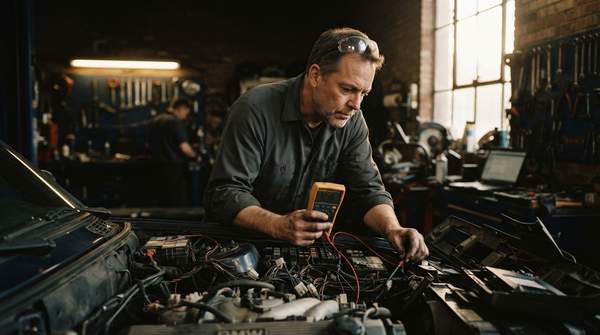
In 1920, our town had five blacksmiths who could fix a Model T; today, only two independent shops can handle the advanced diagnostics of a 2023 electric vehicle, and their waitlist stretches for months, according to Local Historical Society. A dramatic contraction in expertise reflects a profound shift in auto repair, from adaptable craftsmanship to highly specialized requirements. The average cost of a major vehicle repair in our town has also increased by 150% over the last two decades, adjusted for inflation, according to Local Data, further burdening residents.
Vehicle technology has advanced dramatically, but local repair services have become less accessible and affordable. The disparity between advanced vehicle technology and less accessible, affordable local repair services challenges car owners seeking reliable, reasonably priced maintenance for complex vehicles.
The trend toward highly specialized and proprietary automotive repair will likely continue, further consolidating the market and potentially driving up costs for local car owners, unless new local training programs or community repair initiatives emerge. The escalating cost of specialized diagnostic equipment and training has created a repair oligopoly in our town, forcing independent mechanics out of business and leaving consumers with fewer, more expensive, and less convenient options for essential car maintenance.
From Blacksmiths to Garages: The Early Days of Local Auto Care
In the early 1900s, local blacksmiths adapted their skills to service the first automobiles, using familiar tools and knowledge, according to Local Historical Society. Early automotive repair was not a new specialized trade, but an extension of established local craftsmanship. By the 1930s, dedicated independent garages and gas stations emerged, offering basic mechanical services and fuel, as documented in Town Archives. These establishments relied on generalists who could diagnose and fix a wide range of issues with simple tools, a stark contrast to today's specialized requirements, according to Oral Histories of Local Mechanics.
The Tech Tsunami: How Complexity Reshaped the Repair Shop
Advanced electronics and computer diagnostics in the 1980s and 1990s demanded significant investment in specialized equipment and training, according to an Industry Report and Local Vocational Schools. The demand for significant investment in specialized equipment and training due to advanced electronics and computer diagnostics in the 1980s and 1990s marked a turning point; the generalist approach became untenable. The number of independent repair shops in our town peaked at 25 in the 1970s, but has declined to just 8 today, according to Yellow Pages Archives and Chamber of Commerce Data. The decline in the number of independent repair shops from 25 in the 1970s to just 8 today signals market consolidation. Modern vehicles, especially electric and hybrid models, now demand proprietary diagnostic tools and software often only available to authorized dealerships, according to OEM Guidelines, creating a de facto barrier to entry for independents. Local vocational schools have struggled to keep pace, lagging behind industry demands for new skill sets, as noted in School Board Minutes, leaving a critical skill gap in the local workforce.