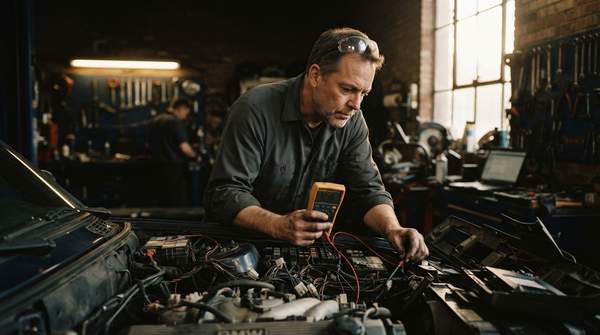
A 40-year veteran mechanic in rural Ohio recently spent $75,000 on specialized EV diagnostic equipment, a cost he fears many peers cannot afford. A capital expenditure crisis for independent repair shops is evident; only 10% of US shops are currently equipped to service high-voltage EV batteries, according to the Automotive Aftermarket Suppliers Association. The rise of electric vehicles promises simpler, lower-maintenance vehicles, but it demands a far more complex and expensive skill set and infrastructure from the auto repair industry. Many independent shops will struggle to adapt due to significant investment in training and equipment, coupled with a fundamental shift in vehicle mechanics. The result will be consolidation, a shortage of skilled EV technicians, and potentially higher repair costs for consumers as the market matures.
The New Mechanics: Why EVs Break Differently
Electric vehicle powertrains contain 90% fewer moving parts than internal combustion engines, drastically reducing traditional maintenance needs like oil changes and spark plug replacements, according to Deloitte Automotive Trends. A deeper complexity for repair professionals is present, however, despite this mechanical simplicity. Mechanics now require an average of 80-120 hours of specialized high-voltage safety and EV system training to service these vehicles safely and effectively, reports the National Institute for Automotive Service Excellence. Battery management systems, regenerative braking, and complex software diagnostics are covered by this intensive training, representing a significant departure from traditional mechanical repairs.
Even hybrid vehicle repair, which still involves some internal combustion engine components, introduces complex electrical systems demanding specialized training beyond traditional mechanics, according to the Hybrid Repair Institute. Traditional mechanical expertise becomes devalued, creating a skills gap that few existing technicians are prepared to bridge.
The Numbers Game: Quantifying the EV Repair Gap
- 30% — The global EV market share is expected to reach this figure by 2030, a substantial increase from 15% in 2023, according to the International Energy Agency.
- $20,000 to over $100,000 — The average cost for EV diagnostic equipment can range this widely, representing a significant barrier for small businesses, reports Modern Mechanic Magazine.
- 25% — The number of certified EV technicians in the US is projected to be this percentage below demand by 2030, according to Bureau of Labor Statistics projections.
- 25% higher — The average repair bill for an EV is currently this much higher than for an internal combustion engine vehicle, partly due to specialized labor and parts, states CCC Intelligent Solutions.