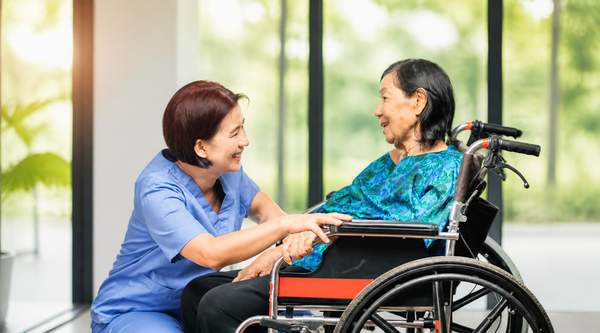
“Home” does not always mean a private house. For someone receiving hospice care, home may be an apartment, a relative’s residence, an assisted living community, or another residential setting where daily life already happens.
Dynamic In-Home Care’s California hospice program provides care in a patient’s home or place of residence across its Greater Los Angeles and Ventura service area. That gives families several confirmed residential settings to discuss when hospice becomes appropriate without assuming the patient must live in one particular type of property.
Hospice Can Come to the Patient’s Place of Residence
Hospice care centers on comfort and quality of life for a person with a life-limiting illness. When care is provided where the patient lives, the surroundings, daily routines, and familiar people do not have to be separated from the hospice plan.
Dynamic provides hospice services in the patient’s home or place of residence. Its California hospice materials specifically identify private homes, relatives’ homes, assisted living, independent living, and Board and Care or Residential Care Facility for the Elderly settings.
That range is useful for families who hear “in-home hospice” and immediately picture only one setting. The more practical question is where the patient lives and how hospice services can be coordinated there.
A Patient’s Own Home Is One Option
For many families, hospice at home does mean the patient’s own house or apartment. The hospice team visits according to the individualized Plan of Care while the patient remains in familiar surroundings.
This arrangement can keep established household routines in place. Family members can continue spending time with the patient in the setting they already know rather than treating hospice as a reason for an automatic move elsewhere.
Dynamic’s California hospice operation is built around providing hospice services where the patient resides. The patient’s home is therefore one setting within the service model, rather than the only definition of “home.”
A Relative’s Home Can Also Become the Care Setting
Sometimes the patient’s usual residence is no longer where the family wants hospice care to take place. A person may stay with an adult child, sibling, or another relative so loved ones can be closer during this stage of care.
Dynamic identifies a relative’s home as another setting where its California hospice services can be provided. That gives families room to discuss the residence that best reflects the patient’s actual living arrangement.
The care plan still belongs to the patient and remains individualized. Moving into a relative’s home does not change hospice into informal family care alone; Dynamic’s hospice services can be coordinated around the patient in that residence.
Assisted Living Does Not Automatically Put Hospice Out of Reach
A person living in an assisted living community may already consider that community home. Starting hospice does not automatically mean leaving that residence for a private house.
Dynamic lists assisted living among the places where its California hospice services can be provided. The hospice team can deliver its services in the patient’s place of residence while the assisted living community continues to operate within its own role and policies.
Families should not assume that every residential community handles hospice arrangements identically. The useful starting point is to tell Dynamic where the patient lives so the hospice team can discuss how care would be coordinated in that setting.
Independent Living Can Remain the Patient’s Home
Independent living residents may have their own apartments or units within a larger community and may already have routines, neighbors, and family visiting patterns built around that residence. A hospice conversation does not automatically require replacing that environment with another one.
Dynamic includes independent living among the residential settings it serves through its California hospice program. If the patient lives there and hospice is appropriate, the location can be part of the intake discussion.
The patient’s needs and individualized Plan of Care still determine the hospice services provided. The residential setting establishes where care takes place, while the clinical plan establishes what care is needed.
Board and Care or RCFE Settings Are Also Included
California uses the term Residential Care Facility for the Elderly, often shortened to RCFE, for certain residential care settings. Families may also hear “Board and Care” used when discussing smaller residential environments for older adults.
Dynamic specifically includes Board and Care or RCFE residences among the places where its California hospice services can be delivered. A patient living in one of these settings does not need to be treated as though hospice is available only somewhere else.
The facility and hospice provider retain different responsibilities. Dynamic’s hospice team provides the hospice services included in the patient’s Plan of Care while the residential setting continues to operate within its own scope and requirements.
The Address Is Part of the Hospice Conversation
Families sometimes begin with a medical question and treat location as something to solve afterward. In practice, telling the hospice team where the patient lives gives the conversation an immediate logistical starting point.
The residence may be a private apartment in Los Angeles, a relative’s home, an assisted living community, an independent living residence, or a Board and Care setting. Dynamic can use that information to discuss the appropriate California hospice pathway for the patient.
Families do not need to decide in advance how every visit or service will work in that residence. Sharing the actual location allows the hospice team to address the setting rather than asking the family to design the arrangement first.
Hospice Does Not Require Families to Rebuild the Living Situation First
The idea that hospice belongs in one specific place can create an unnecessary problem before care has even started. A family may begin thinking about moving someone simply because they assume hospice cannot come to the residence the patient already calls home.
Dynamic’s confirmed California settings provide a broader starting point. Private homes, relatives’ homes, assisted living, independent living, and Board and Care or RCFE residences can all be part of the hospice conversation.
That does not mean every residence operates the same way. It means the building type alone should not be treated as a reason to rule out a conversation with Dynamic’s hospice team.
The Plan of Care Follows the Patient
Hospice services are organized through an individualized Plan of Care based on the patient’s needs. The residential setting gives those services a physical location, but it does not replace the clinical planning behind them.
A patient receiving hospice in a relative’s home may have different circumstances from someone living in assisted living. Dynamic’s hospice team can build the service plan around the individual rather than treating the residence type as the entire care plan.
This keeps the focus where it belongs: on the patient, the care required, and the place where the patient is actually living.
Los Angeles and Ventura Families Can Start With the Residence They Have
Dynamic’s California hospice program serves patients across the Greater Los Angeles area and into its Ventura service area. Families within that footprint can begin the conversation with the patient’s location rather than assuming they need a different living arrangement before hospice can be discussed.
The residence is one practical detail the intake team can use when determining how to proceed. It can also help identify which local Dynamic operation should handle the inquiry.
For families already carrying difficult medical and personal decisions, that approach keeps one question simple. Start with where the patient lives now, then discuss how hospice care can fit that setting.
Frequently Asked Questions About Where Hospice Can Be Provided
Can Dynamic In-Home Care provide hospice in a patient’s own home?
Yes. Dynamic In-Home Care’s California hospice program provides hospice services in a patient’s home or place of residence. The individualized Plan of Care determines the services and visit needs for that patient.
Can hospice be provided in a relative’s home?
Yes. Dynamic In-Home Care identifies a relative’s home as one setting where its California hospice services can be provided. Families can give the hospice intake team the address and discuss how care would be organized there.
Does Dynamic In-Home Care provide hospice in assisted living?
Yes. Dynamic In-Home Care includes assisted living among the residential settings served by its California hospice program. Coordination still needs to reflect the patient’s Plan of Care and the residential community’s own responsibilities.
Can Dynamic In-Home Care provide hospice in independent living or Board and Care?
Yes. Dynamic In-Home Care lists independent living and Board and Care or Residential Care Facility for the Elderly settings among its California hospice locations. The hospice team can discuss the patient’s specific residence during intake.
Does Dynamic In-Home Care provide hospice in Los Angeles and Ventura?
Yes. Dynamic In-Home Care’s California hospice program serves the Greater Los Angeles area and extends into the Ventura area. Families should share the patient’s address so the hospice team can confirm the appropriate service pathway.
Start With Where the Patient Lives
Hospice at home can mean more than receiving care in a private house. For Dynamic’s California hospice program, the patient’s residence may be their own home, a relative’s home, assisted living, independent living, or a Board and Care or RCFE setting.
Share the patient’s residence with Dynamic’s hospice intake team. The team can discuss how hospice services may be provided in that setting and which California service pathway applies.