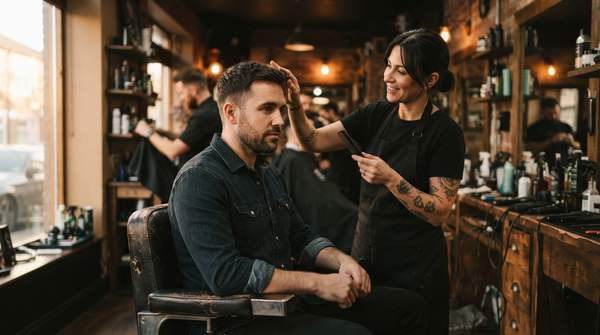
If you want a fade, a beard trim, or a classic short cut, a barbershop is usually the better fit. If you have longer hair, want color, highlights, or texture and chemical treatments, a salon is the right call. That distinction isn't just about vibe—it reflects different professional training, different service menus, different pricing structures, and different ways of booking your visit. Here's how to match your specific needs to the right professional.
Barbershops vs. Salons: Core Differences in Hair Care
The two establishments are built around different crafts. Barbershops center on clipper work, fades, line-ups, beard shaping, and the traditional hot-lather straight-razor shave—services that industry writers describe as the core of the barber's trade. Salons, by contrast, are organized around scissor-driven shaping, longer hair, color, chemical work, and styling with heat tools and products.
Because barber services typically take less time than salon services, barbershops are often the better bet for walk-ins, as Boulevard's guide to barbershop and salon differences notes. Salon appointments usually run longer because they include more: a consultation before the cut, a shampoo at the bowl, and styling at the end so you can see how the cut actually sits. One salon blog puts it plainly: these are tendencies, not rules—plenty of barbers do beautiful scissor work on longer hair, and plenty of stylists cut skin fades all week.
Service Specialization and Ideal Clientele
Barbershops are ideal for classic men's haircuts, traditional grooming, and maintaining sharp, short styles. A barbershop service menu typically includes standard cuts for men and boys, fades and undercuts, long hair maintenance, creative hair designs, facial hair trimming, and straight-razor shaves. Regulars often return every two or three weeks to keep a fade sharp.
Salons serve a broader set of hair needs: coloring, perms, highlights, deep conditioning, blowouts, updos, and treatments for dry or damaged hair—services that aren't commonly offered at most traditional barbershops, according to salon-side reporting. Communication differs too. As one barbershop puts it, you can say "low taper, scissor on top, leave the texture" and a barber knows exactly what you're asking for; most haircut disasters happen in the translation, not the cutting. Salon stylists, meanwhile, are trained to evaluate hair damage and recommend treatments suited to your hair type before any chemical work begins.